
This work is licensed under a Creative Commons Attribution-NonCommercial-ShareAlike 4.0 International License.

This work is licensed under a Creative Commons Attribution-NonCommercial-ShareAlike 4.0 International License.
This work is licensed under a Creative Commons Attribution-NonCommercial-ShareAlike 4.0 International License.
PAGE 85 (Single panel, color)
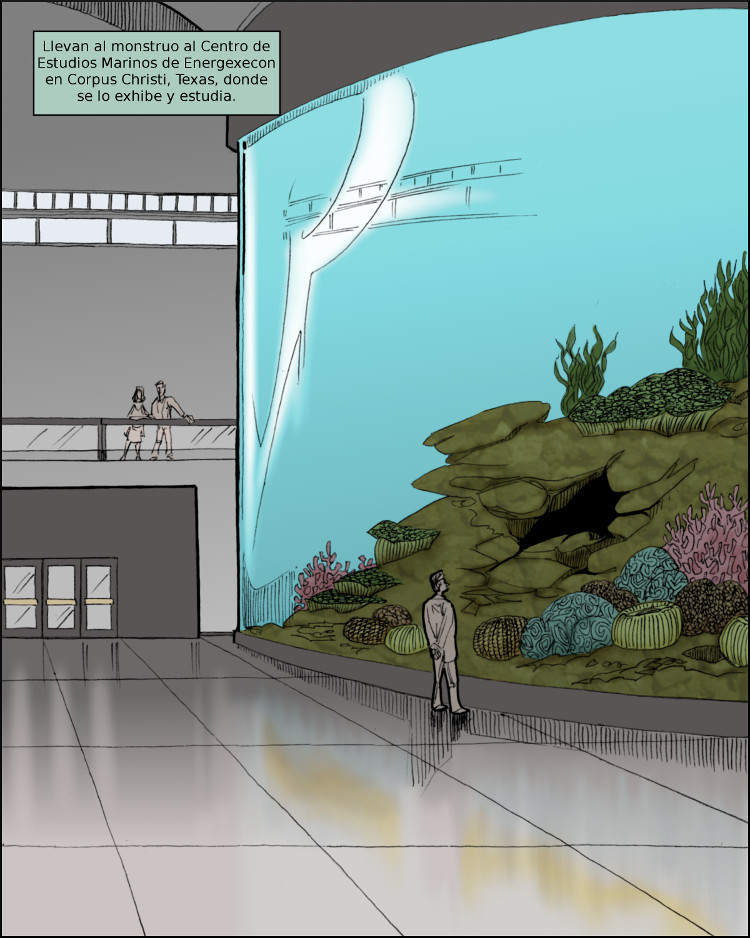
(Note: on this and some following pages the Creature is now housed in a giant cylindrical glass tank, similar in construction to one you can see at [redacted]. In the middle of this giant tank is some sort of coral structure inside of which the Creature (mostly) lurks.
Single panel: View of the giant tank as described above.
CAPTION – PSEUDO-NARRATION (1): The Creature is brought to the Energexecon Marine Center in Corpus Christi, Texas, where it is exhibited and studied.
Translation (1): Llevan al monstruo al Centro de Estudios Marinos de Energexecon en Corpus Christi, Texas, donde se lo exhibe y estudia.


 Carnada (Español/Versión de página larga)
Carnada (Español/Versión deslizante)
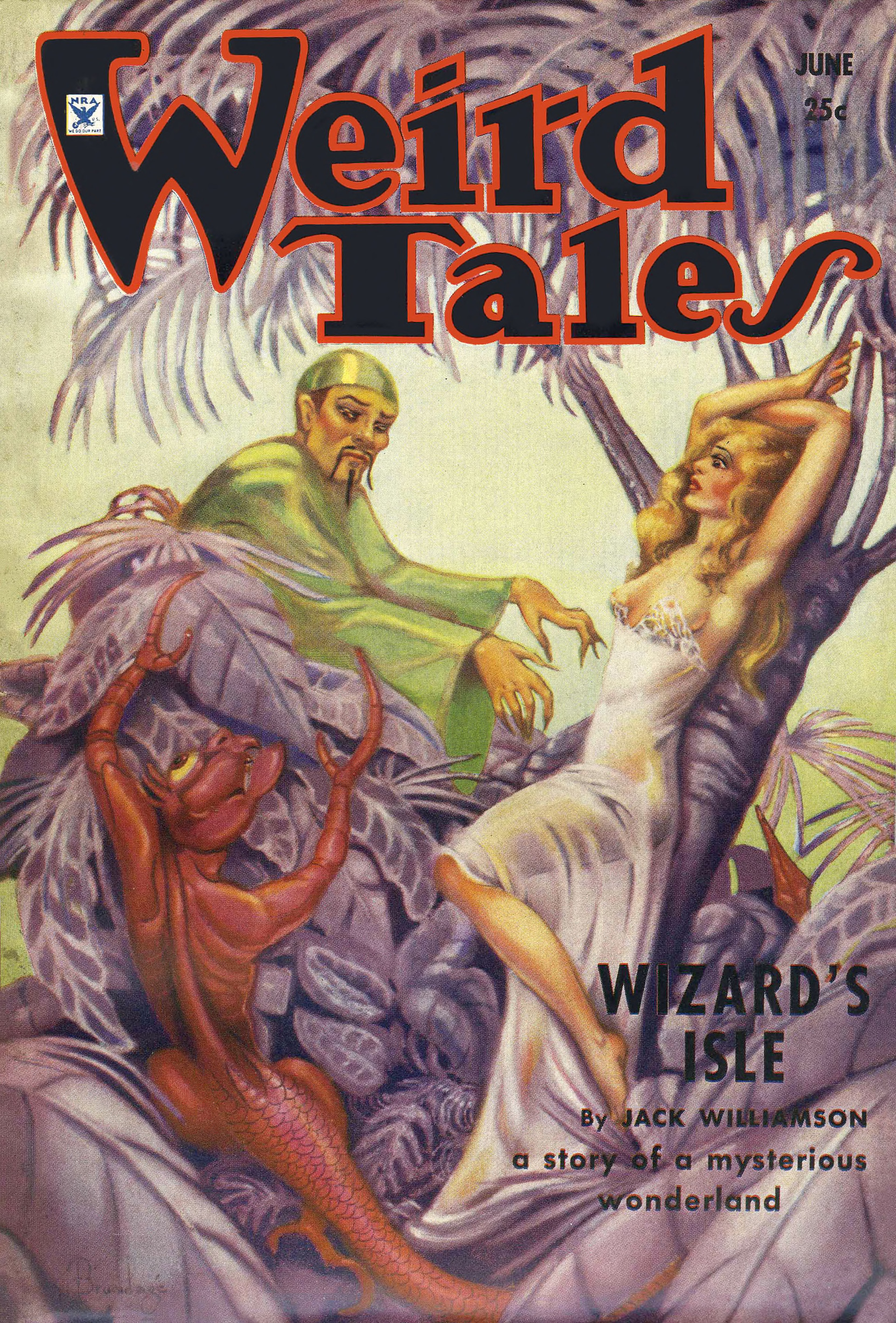
Why go exploring a tropical island in your clingy nightgown? You’ll attract racial menace that way, as Margaret Brundage illustrates on this June 1934 cover of Weird Tales.
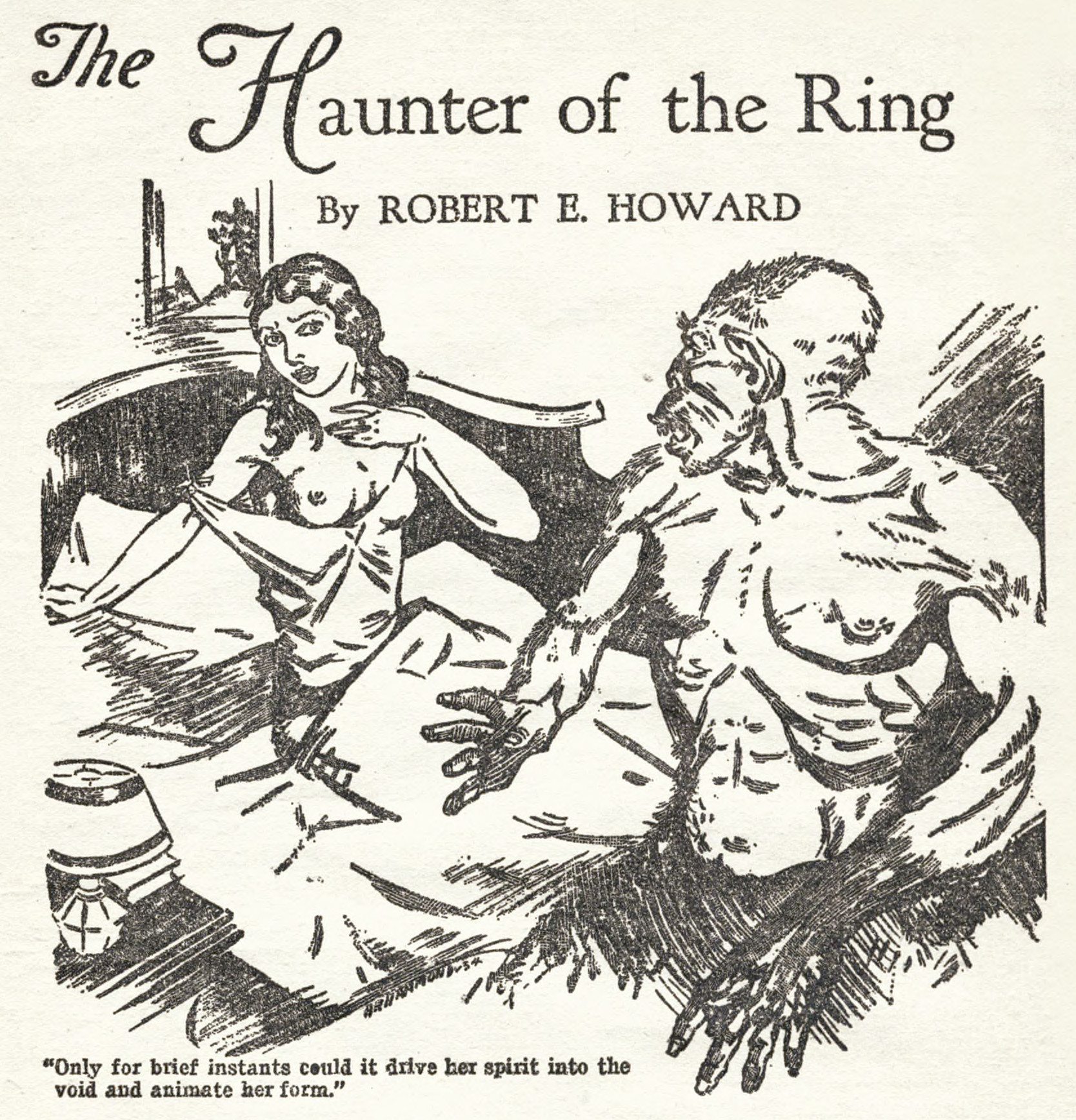
The interior art for this issue is less spectacular than others, though there is an interesting piece by the mysterious H.R. Hammond at the head of another early Robert E. Howard story, “The Haunter of the Ring.”
This issue of Weird Tales is available to read or download from the Internet Archive.
This work is licensed under a Creative Commons Attribution-NonCommercial-ShareAlike 4.0 International License.
This work is licensed under a Creative Commons Attribution-NonCommercial-ShareAlike 4.0 International License.
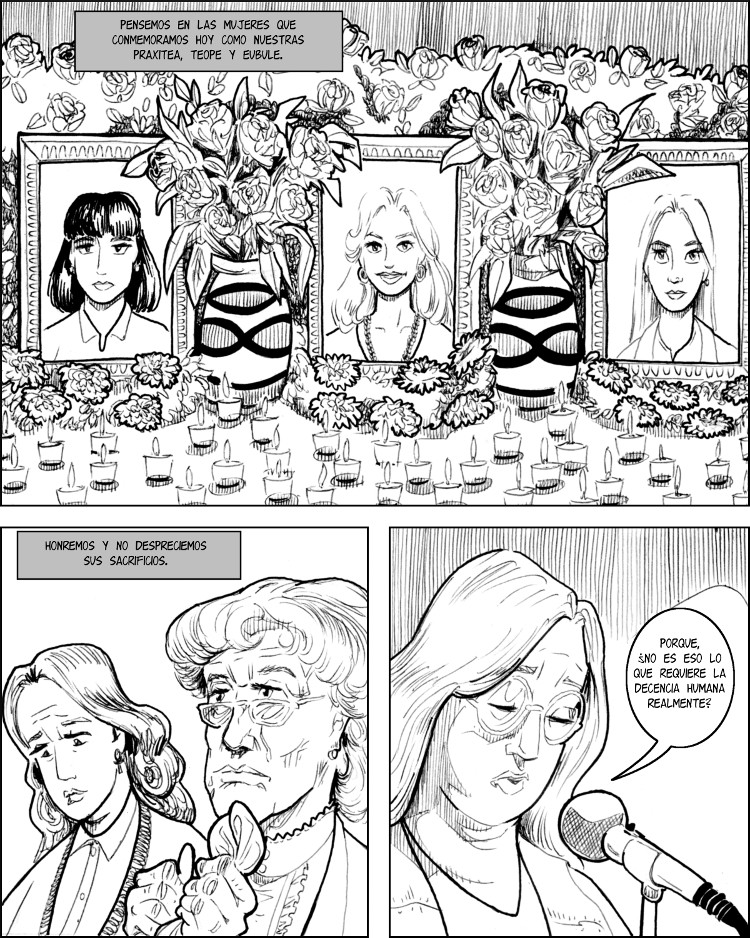
PAGE 84 (Three panels, long one across the top).
Panel 1: Long view showing the table set out with the portraits of the three women Eliza, Daphne, and Claudia, with other arrangements.
CAPTION – UU Minister speaking (1): Let us think of the women we commemorate today as our Praxithea, Theope, and Eubule.
Translation (1): Pensemos en las mujeres que conmemoramos hoy como nuestras Praxitea, Teope y Eubule.
Panel 2: Close-up of a particular mourner, showing signs of grief. The details are at the artist’s discretion.
CAPTION – UU Minister speaking (2): Let us honor and not disdain their sacrifices.
Translation (2): Honremos y no despreciemos sus sacrificios.
Panel 3: Close-up view on the UU Minister again. Her head is bent forward and her eyes are closed.
CAPTION – UU Minister speaking (3): For is that not what human decency really requires?
Translation (3): Porque, ¿no es eso lo que requiere la decencia humana realmente?
Carnada (Español/Versión de página larga)
Carnada (Español/Versión deslizante)
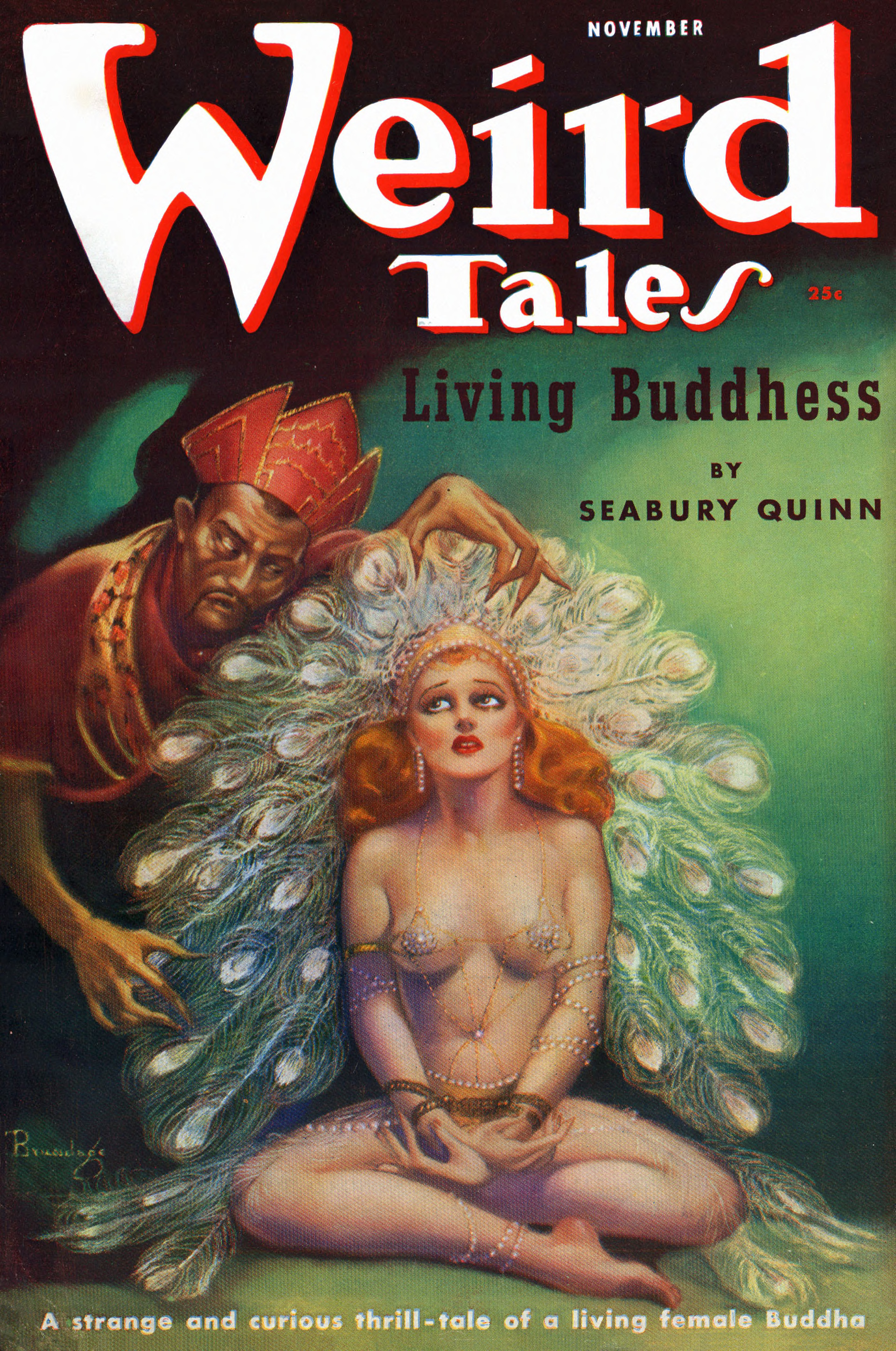
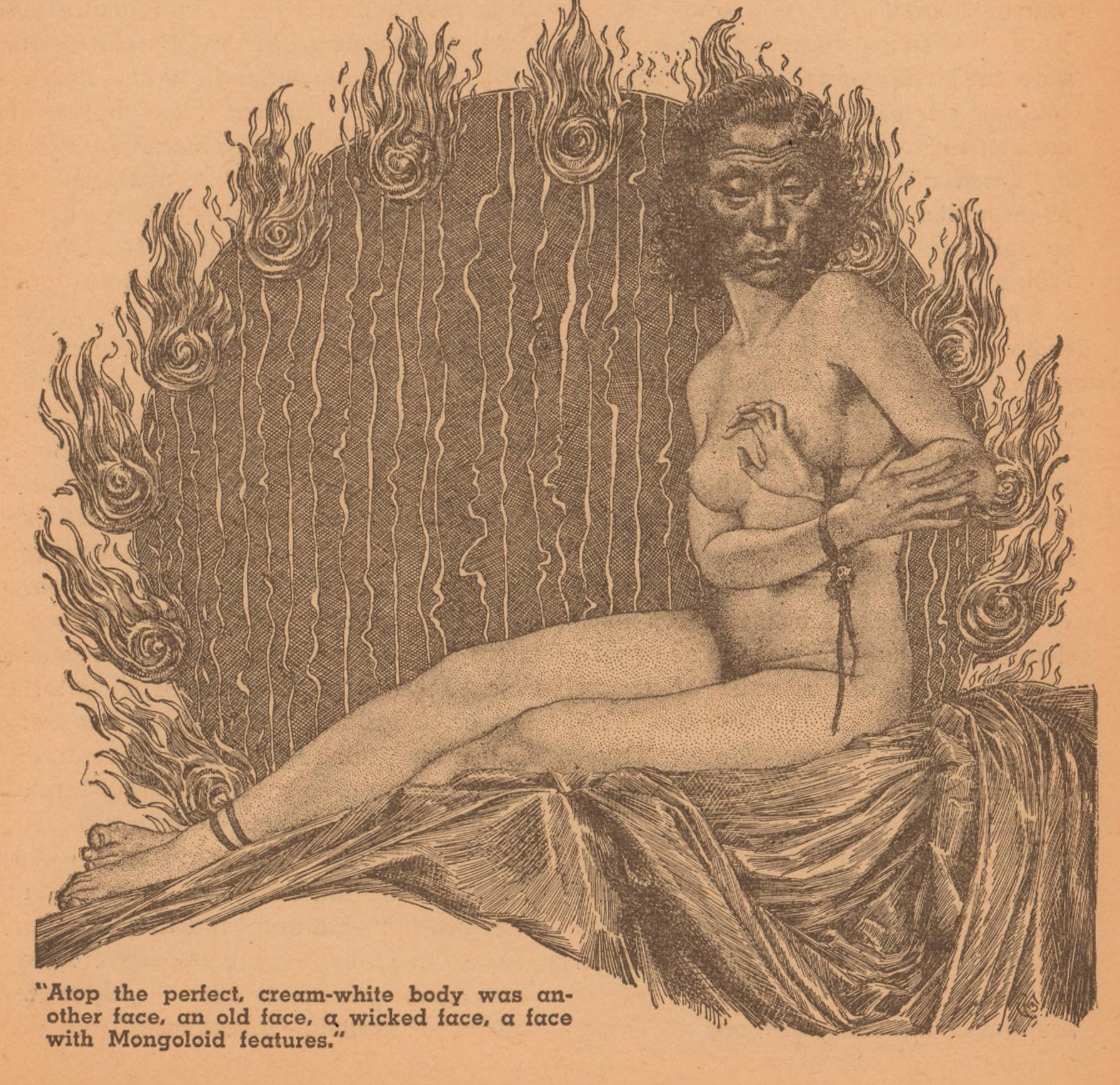
Some more orientalism on the cover of the November 1937 Weird Tales by Margaret Brundage. Virgil Finlay did a lot of interior illustration on this issue as well. The interior illustration he did for Seabury Quinn’s “Living Buddhess” cover story has perhaps not aged well, and not just in the sense that the paper on which it was printed did not age well.
This issue of Weird Tales is available to read or download at the Internet Archive.
This work is licensed under a Creative Commons Attribution-NonCommercial-ShareAlike 4.0 International License.
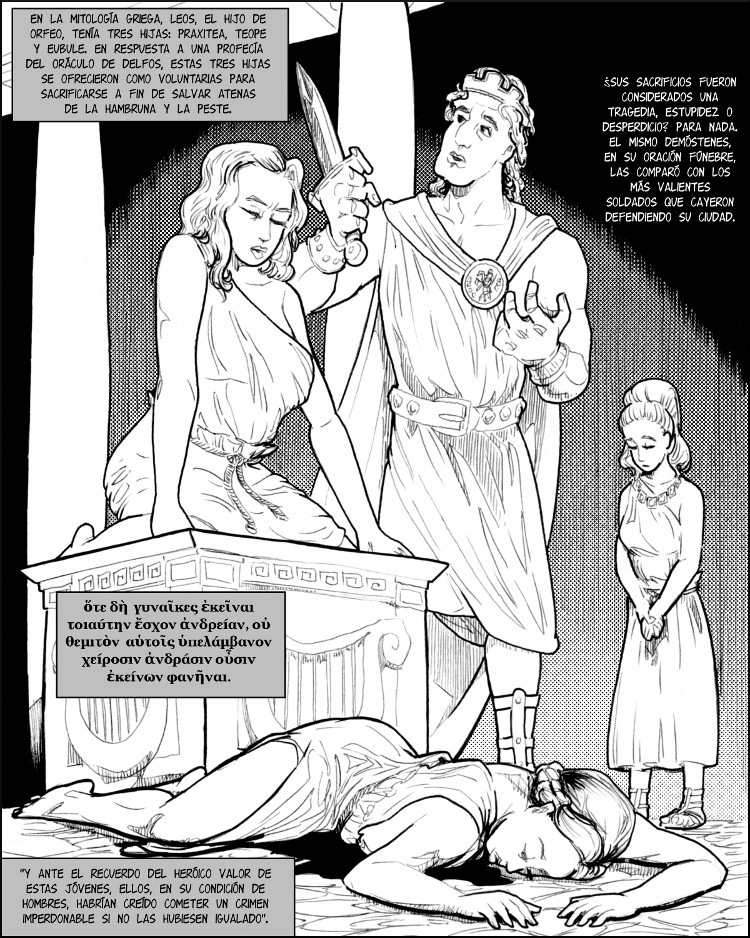
PAGE 83 (Single panel page)
Single panel: A representation of Leos sacrificing his three daughters Praxithea, Theope, and Eubule. There are a number of art-historical views of what human sacrifices might have looked like in Archaic Greece and mostly this will be left to the discretion of the artist, with the recommendation that he image search some of the more famous Greek maiden sacrifices, such as those of Iphigenia or Polyxena, and extrapolate from there. Perhaps Praxithea can be lying already sacrificed at her father’s feet, Theope can be under the knife, and Eubule can be patiently waiting her turn. The four captions can be at the corners of the illustration, or otherwise arranged as seems reasonable.
CAPTION – UU Minister speaking (1): In Greek legend, Leos, the son of Orpheus, had three daughters: Praxithea, Theope, and Eubule. In response to a prophecy from the Oracle at Delphi, these three daughters volunteered themselves for sacrifice to save Athens from famine and plague.
Translation (1): En la mitología griega, Leos, el hijo de Orfeo, tenía tres hijas: Praxitea, Teope y Eubule. En respuesta a una profecía del Oráculo de Delfos, estas tres hijas se ofrecieron como voluntarias para sacrificarse a fin de salvar Atenas de la hambruna y la peste.
CAPTION – UU Minister speaking (2): Were their sacrifices regarded as tragedy, stupidity, or waste? Far from it. Demosthenes himself, in his funeral oration, compared them to the bravest of soldiers who fell defending their city.
Translation (2): ¿Sus sacrificios fueron considerados una tragedia, estupidez o desperdicio? Para nada. El mismo Demóstenes, en su oración fúnebre, las comparó con los más valientes soldados que cayeron defendiendo su ciudad.
CAPTION – UU Minister quoting Demosthenes (3): ὅτε δὴ γυναῖκες ἐκεῖναι τοιαύτην ἔσχον ἀνδρείαν, οὐ θεμιτὸν αὑτοῖς ὑπελάμβανον χείροσιν ἀνδράσιν οὖσιν ἐκείνων φανῆναι.
Comment (3): Do not attempt to translate this passage in Greek. It’s translated into English at (4) below, and you can translate it from there into your target language.
CAPTION – UU – Minister translating (4): “When, therefore, such courage was displayed by those women, they looked upon it as a heinous thing if they, being men, should have proved to possess less of manhood.”
Translation (4): “Y ante el recuerdo del heróico valor de estas jóvenes, ellos, en su condición de hombres, habrían creído cometer un crimen imperdonable si no las hubiesen igualado”.
Carnada (Español/Versión de página larga)
Carnada (Español/Versión deslizante)
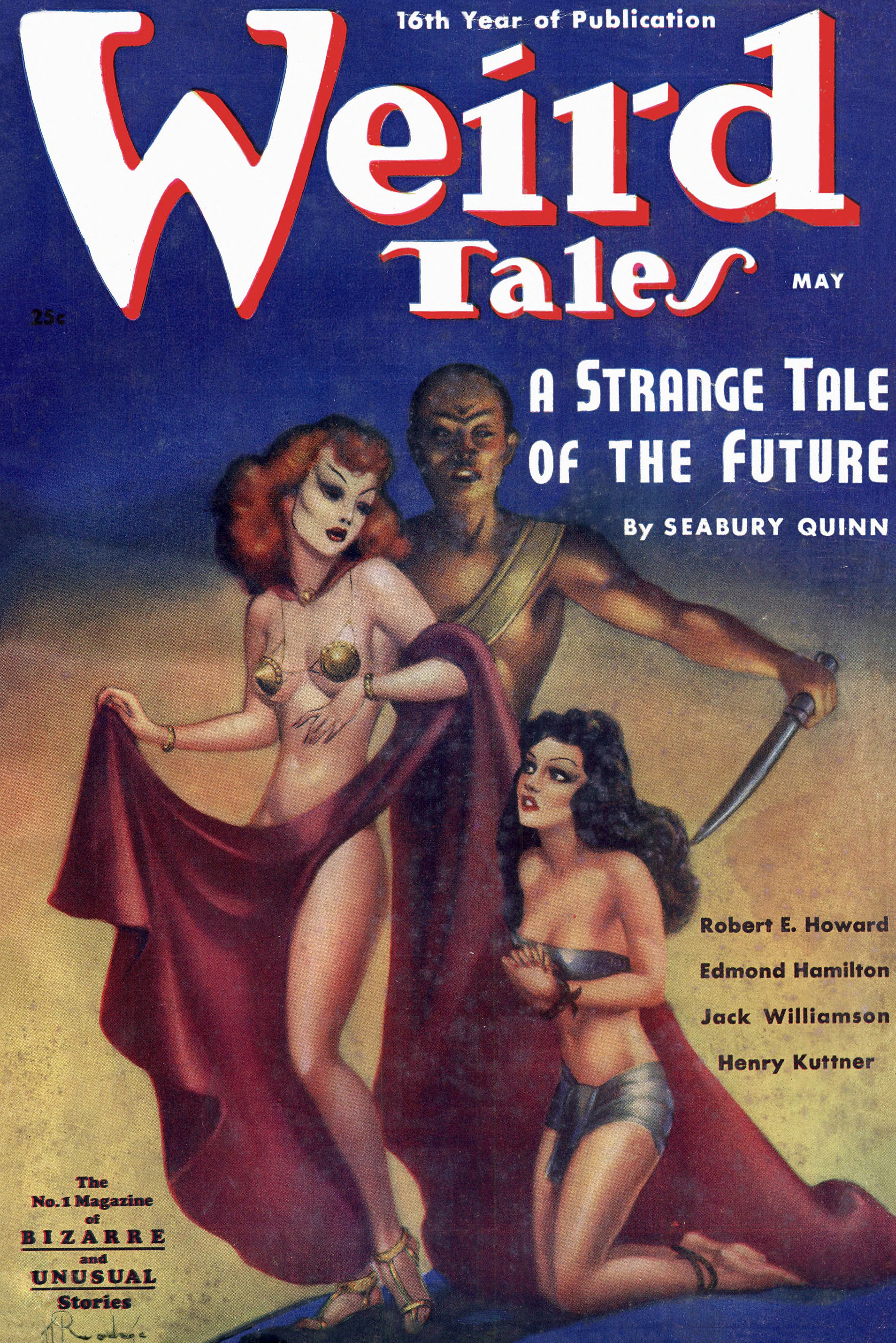
The “strange tale of the future” Margaret Brundage was illustrating for this May 1938 issue of Weird Tales appears to be Seabury Quinn’s “Goetterdaemmerung.” (In 1938 umlauts were scarce, apparently.) Virgil Finlay did a lot of interior work on this issue, including this illustration for the title story:
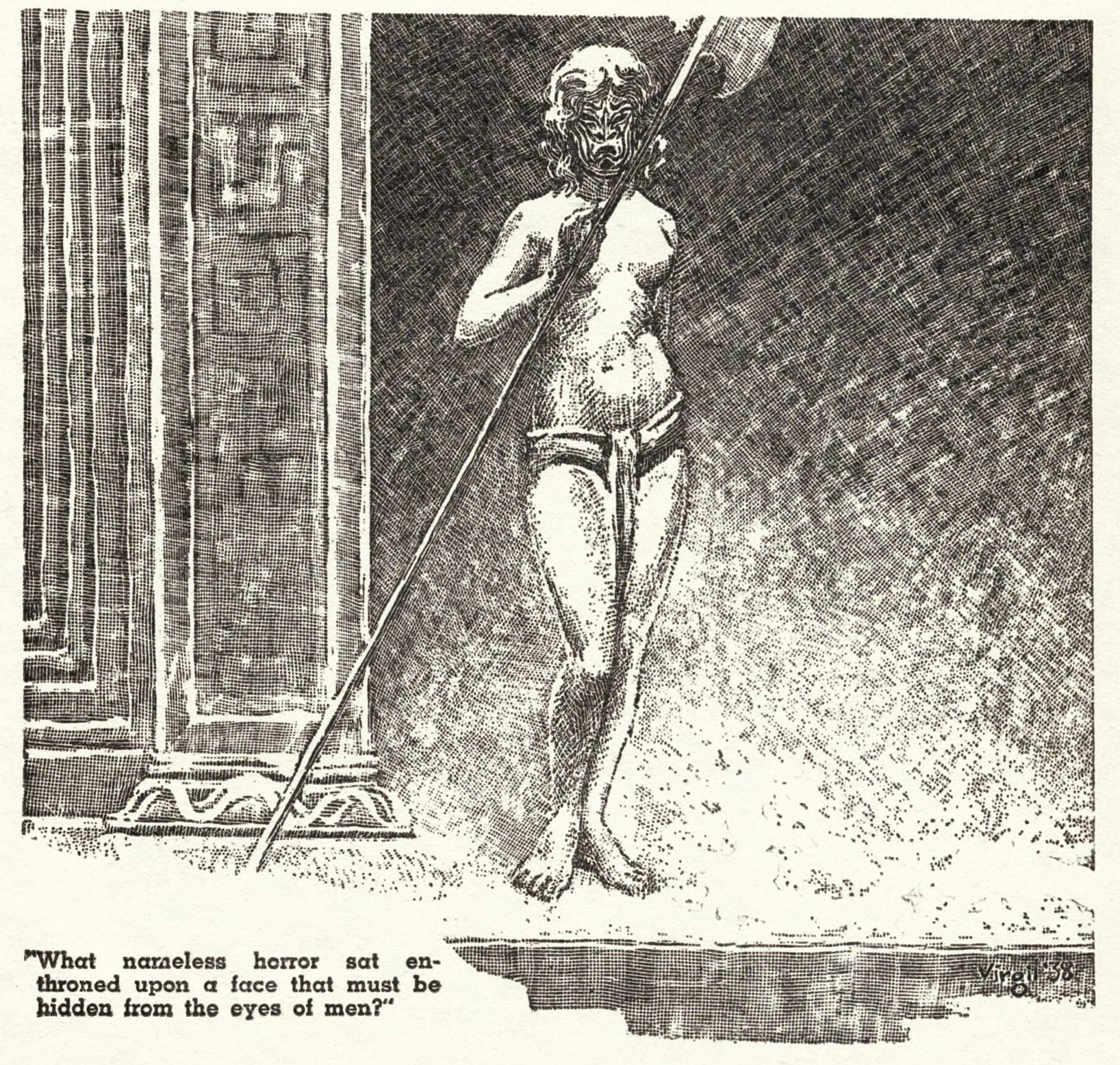
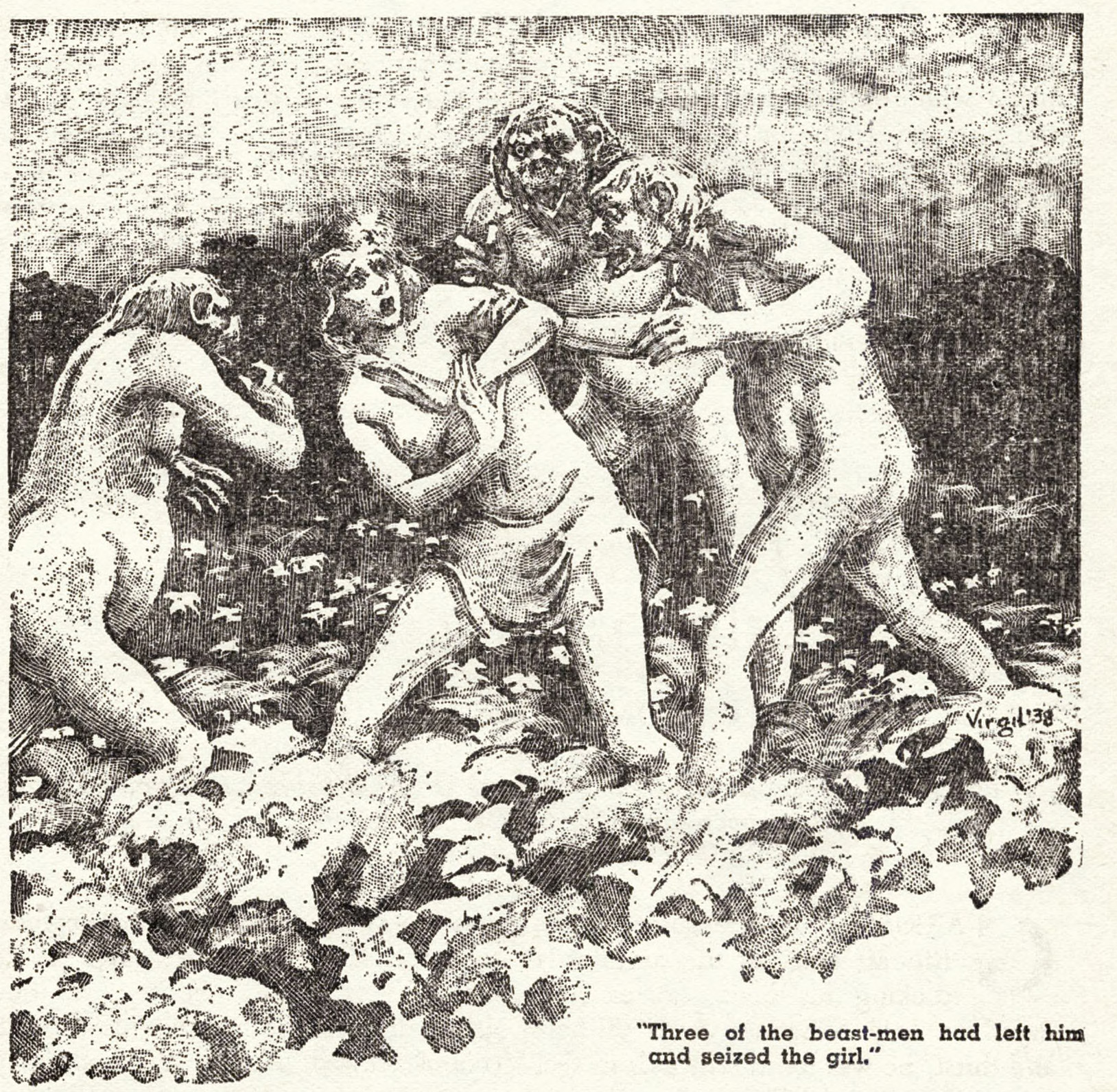
Finaly also illustrated what looks to my eyes like a bit of the old ultraviolence about to happen for Edmond Hamilton’s “The Isle of the Sleeper.”
This issue of Weird Tales is available to read and download at the Internet Archive.
This work is licensed under a Creative Commons Attribution-NonCommercial-ShareAlike 4.0 International License.