Aprenda português VIII: A Isca 007

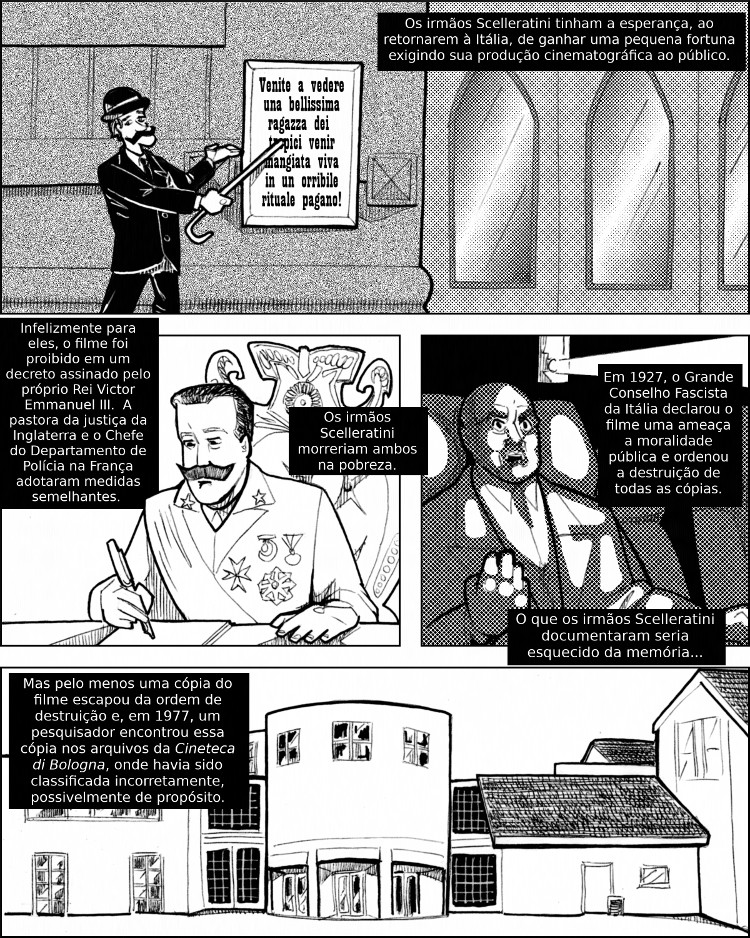
O filme do sacrifício da jovem é um escândalo em toda a Europa e é proibido.

Creative Commons License
This work is licensed under a Creative Commons Attribution-NonCommercial-ShareAlike 4.0 International License.

PAGE 7 (Four panels)

Panel 1: Enzo in a suit, standing at the front door of an Italian cinema, proudly gesturing with his cane at a promotional placard which reads “Venite a vedere una bellissima ragazza dei tropici venir mangiata viva in un orribile rituale pagano!”

CAPTION – PSEUDO-NARRATION (1): The Scelleratini brothers had hoped, on their return to Italy, to make a small fortune exhibiting their remarkable footage to the public.

Translation (1): CAPTION – PSEUDO-NARRATION (1): Os irmãos Scelleratini tinham a esperança, ao retornarem à Itália, de ganhar uma pequena fortuna exigindo sua produção cinematográfica ao público.

Panel 2: KING VICTOR EMMANUEL III sitting at an ornate desk in his royal study, signing a piece of paper.

CAPTION – PSEUDO-NARRATION (2): Unfortunately for them, their film was banned by an edict signed by King Victor Emmanuel III himself. The Lord Chancellor in England and the Chief Prefect of Police in France took similar actions.

Translation (2): CAPTION – PSEUDO-NARRATION (2): Infelizmente para eles, o filme foi proibido em um decreto assinado pelo próprio Rei Victor Emmanuel III. A pastora da justiça da Inglaterra e o Chefe do Departamento de Polícia na França adotaram medidas semelhantes. .

CAPTION – PSEUDO-NARRATION (3): Both Scelleratini brothers would die in poverty.

Translation (3): CAPTION – PSEUDO-NARRATION (3): Os irmãos Scelleratini morreriam ambos na pobreza.

Panel 3: BENITO MUSSOLINI, sitting in his private cinema, watching something. Mussolini’s face is illuminated by reflected light from the screen. He looks disgusted and outraged.

CAPTION – PSEUDO-NARRATION (4): In 1927, Italy’s Fascist Grand Council would declare the film a menace to public morality and order all copies of it destroyed.

Translation (4): CAPTION – PSEUDO-NARRATION (4): Em 1927, o Grande Conselho Fascista da Itália declarou o filme uma ameaça a moralidade pública e ordenou a destruição de todas as cópias.

CAPTION – PSEUDO-NARRATION (5): What the Scelleratini brothers documented would pass out of memory…

Translation (5): CAPTION – PSEUDO-NARRATION (5): O que os irmãos Scelleratini documentaram seria esquecido da memória…

Panel 4: Exterior view of the Cineteca di Bologna (drawn or incorporated as a “comicked up” photograph).

CAPTION – PSEUDO-NARRATION (6): But at least one print of the film escaped the destruction order, and in 1977, a researcher found that print in the archives of the Cineteca di Bologna, where it had been misfiled, possibly on purpose.

Translation (6); CAPTION – PSEUDO-NARRATION (6): Mas pelo menos uma cópia do filme escapou da ordem de destruição e, em 1977, um pesquisador encontrou essa cópia nos arquivos da Cineteca di Bologna, onde havia sido classificada incorretamente, possivelmente de propósito.

  A Isca (Português/Versão em página longa)
A Isca (Português/Versão em carrossel)

Two takes on a theme

This woman with the wolves (and clothed only with her hair) on the September 1927 issue of Weird Tales is the work of C.C. Senf. Evidently it was a theme that the editors liked, because they would commission Margaret Brundage to do something very similar for the March 1933 cover.

And to perhaps no one’s surprise, Seabury Quinn has stories in both issues.

Both the September 1927 and the March 1933 issues of Weird Tales are available to be read at and downloaded from the Internet Archive.

Aprenda português VII: A Isca 006

A bela nativa se sacrifica ao monstro do mar!

Creative Commons License
This work is licensed under a Creative Commons Attribution-NonCommercial-ShareAlike 4.0 International License.

PAGE 6 (Four panels)

(Note: These panels should be in sepia)

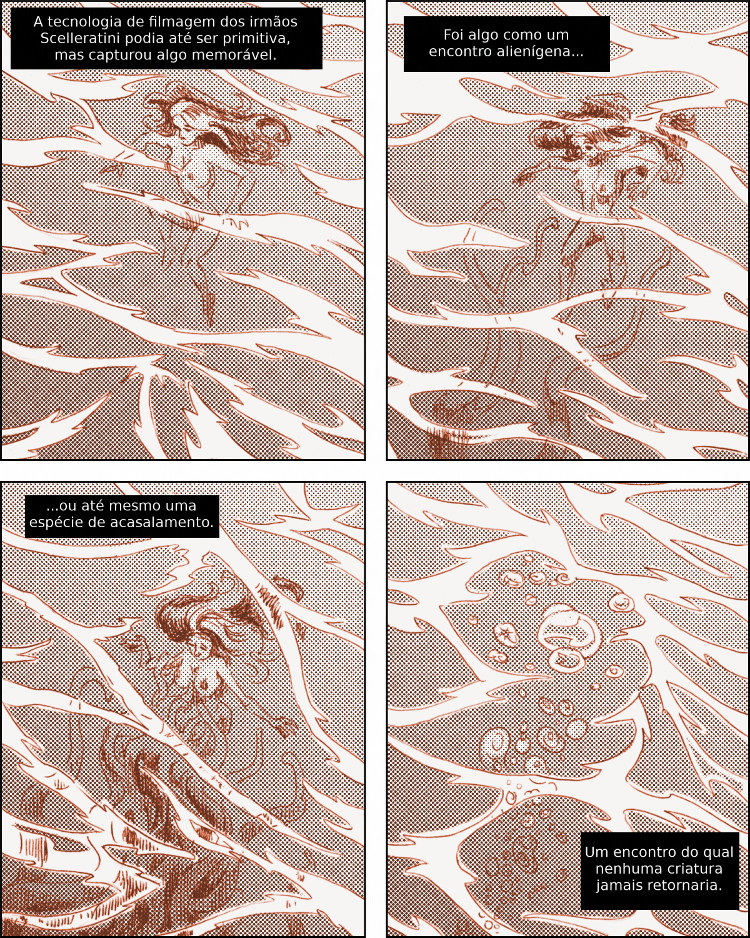
Panel 1: View of the Bride in the water, swimming upright but entirely below the surface (we can just see her as blurry outlines).

CAPTION – PSEUDO-NARRATION (1): The Scelleratini brothers’ film technology might have been primitive, but it captured something remarkable.

Translation (1):: A tecnologia de filmagem dos irmãos Scelleratini podia até ser primitiva, mas capturou algo memorável.

Panel 2: View of the Bride, still in the water, with a few tentacles reaching out from the depths to touch her.

CAPTION – PSEUDO-NARRATION (2): It was something like an alien encounter…

Translation (2): Foi algo como um encontro alienígena…

Panel 3: The Bride now enmeshed in a roiling mass of tentacles.

CAPTION – PSEUDO-NARRATION (3): …or even a mating.

Translation (3): …ou até mesmo uma espécie de acasalamento.

Panel 4; The surface of the waters. The Bride is no longer visible. A few bubbles are breaking through the surface.

CAPTION – PSEUDO-NARRATION (4): It was an encounter from which one of the parties would never return.

Translation (4): Um encontro do qual nenhuma criatura jamais retornaria.

  A Isca (Português/Versão em página longa)
A Isca (Português/Versão em carrossel)

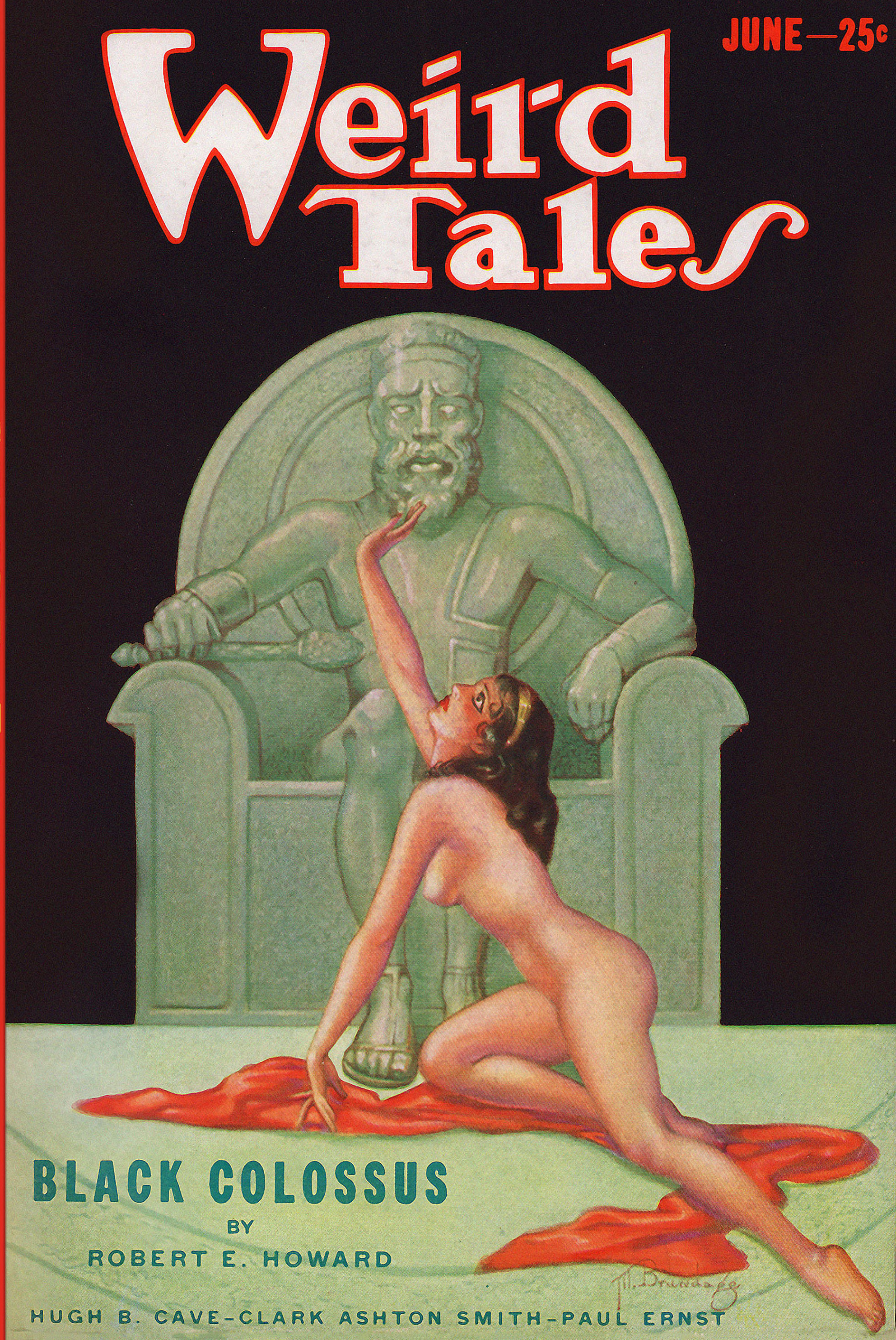
The Black Colossus is looking a bit pale

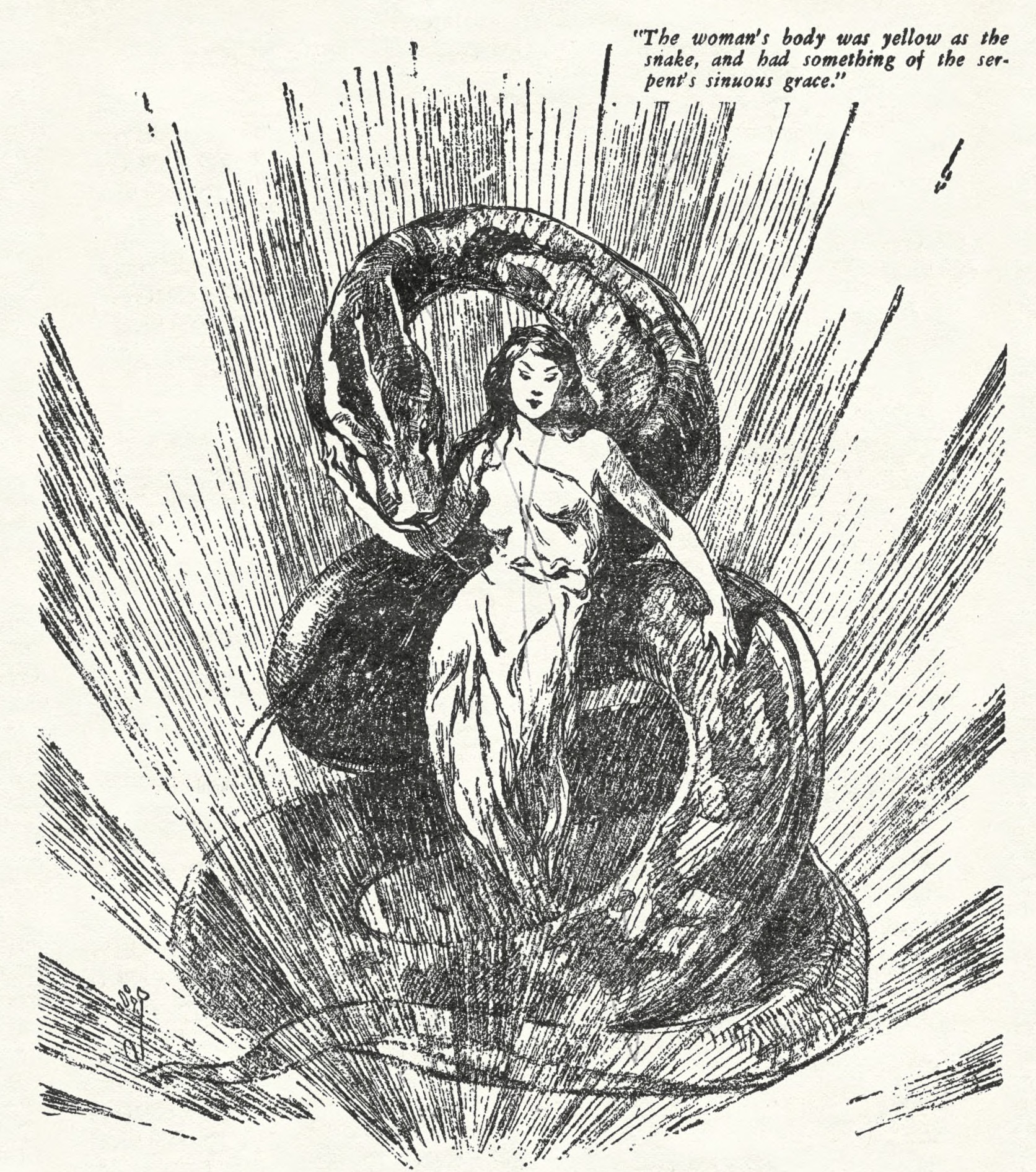
A Margarget Brundage cover for the June 1933 issue of Weird Tales, visiting some familiar themes. Illustrating an interior story, “Golden Blood” by Jack Williamson, is work by James Allen St. John (1873-1957), famous as an illustrator of the novels of Edgar Rice Burroughs and regarded by many as “the Godfather of American Fantasy Art.”

“The woman’s body was yellow as the snake, and had something of the serpent’s sinuous grace.”

This issue of Weird Tales is available to read and download at the Internet Archive.

Aprenda português VI: A Isca 005

Uma linda noiva nua mergulha nas profundezas misteriosas.

Creative Commons License
This work is licensed under a Creative Commons Attribution-NonCommercial-ShareAlike 4.0 International License.

PAGE 5 (Four panels)

(Note: Still in sepia)

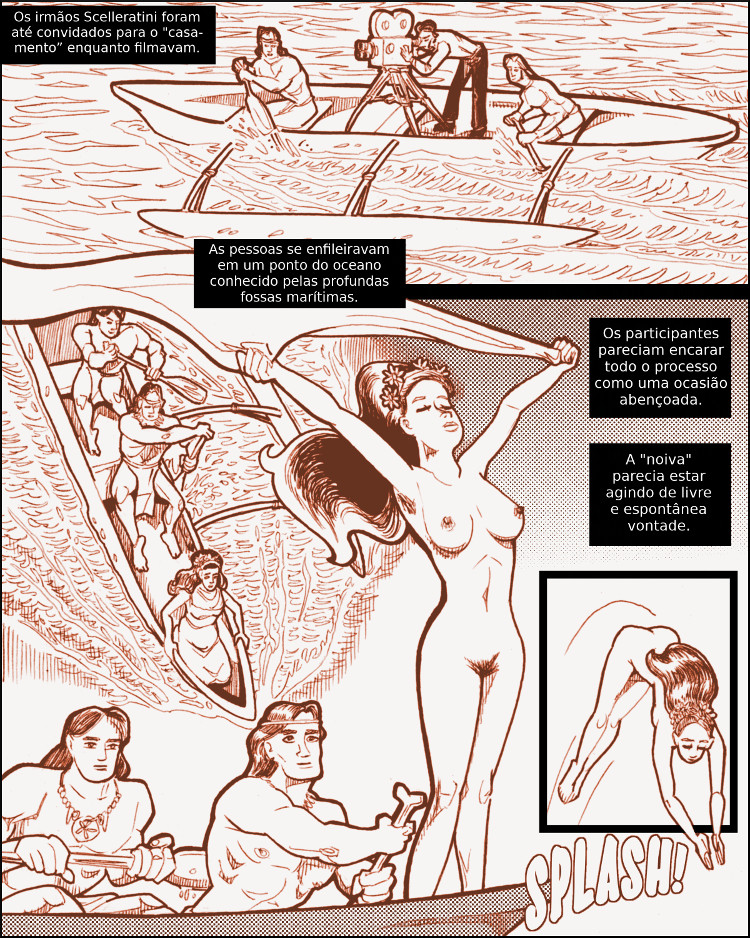
Panel 1: A long Polynesian outrigger canoe, being rowed through the surf by muscular young men. Standing implausibly in the middle of the canoe is Enzo, his movie camera rigged on a tripod somehow, cranking away and filming some scene he can see from the canoe.

CAPTION – PSEUDO-NARRATION (1): The Scelleratini brothers were even invited along to film the “wedding.”

Translation (1): Os irmãos Scelleratini foram até convidados para o “casamento” enquanto filmavam.

Panel 2: View of another outrigger canoe, also rowed by strong young men. The Bride sits in the bow of the canoe, gazing out to sea.

CAPTION – PSEUDO-NARRATION (2): The people rowed out to a spot of ocean known to be over a deep oceanic trench.

Translation (2) As pessoas se enfileiravam em um ponto do oceano conhecido pelas profundas fossas marítimas.

Panel 3: The Bride now stands in the bow of the canoe. She has removed her muumuu and is naked, holding her muumuu over her head so that it trails behind her in the wind. She is wearing a beatific expression.

CAPTION – PSEUDO-NARRATION (3): Those involved seemed to regard the entire proceeding as a blessed occasion.

Translation (3): Os participantes pareciam encarar todo o processo como uma ocasião abençoada.

Panel 4: The Bride in mid-dive off the bow of the canoe into the ocean.

CAPTION – PSEUDO-NARRATION (4): The “bride” seemed to be acting of her own free will.

Translation (4): CAPTION – PSEUDO-NARRATION (4): A “noiva” parecia estar agindo de livre e espontânea vontade.

  A Isca (Português/Versão em página longa)
A Isca (Português/Versão em carrossel)
Menaced by the blob

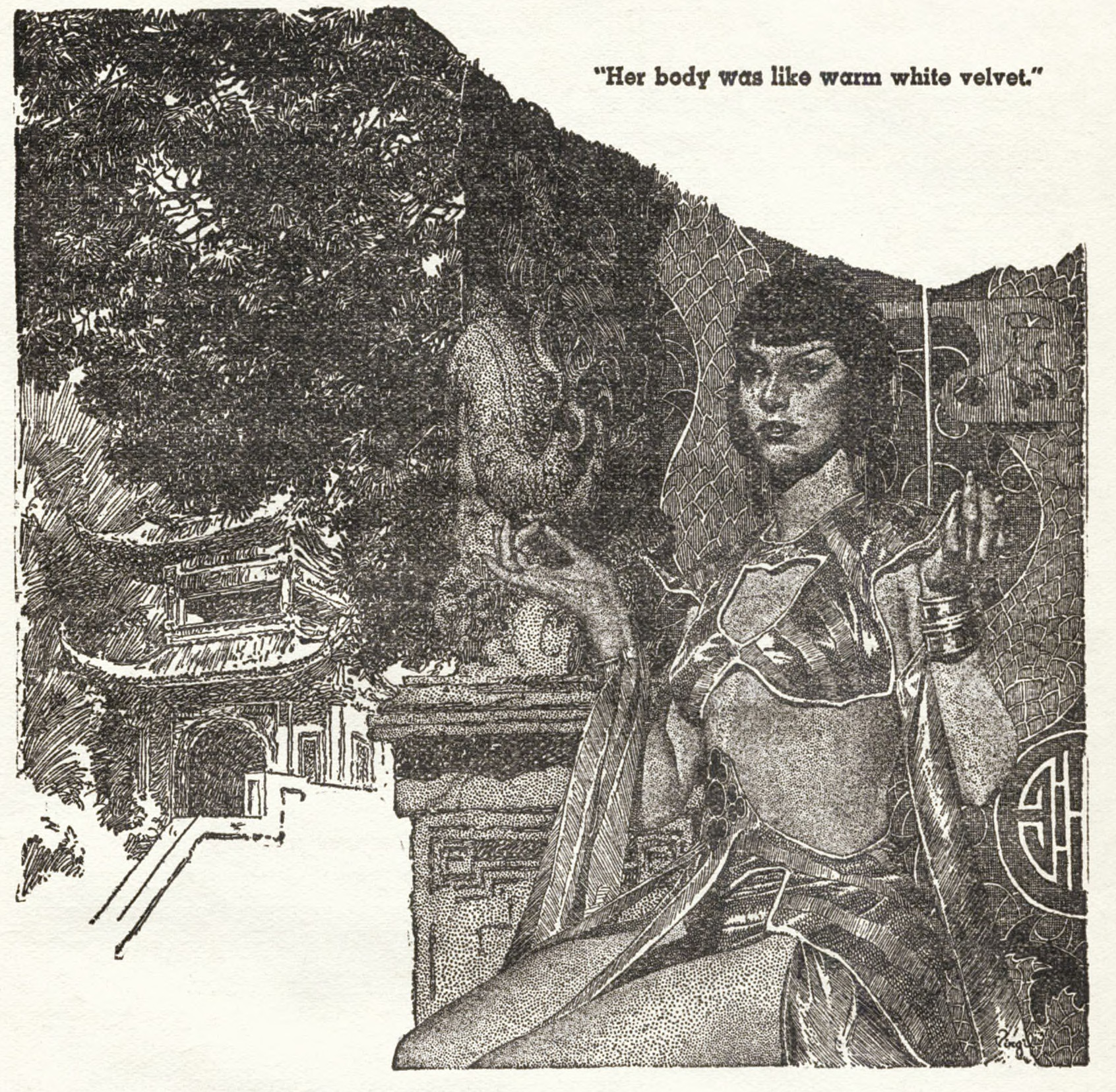
Whatever instructions Margaret Brundage got for the monster on the cover of the August 1937 issue of Weird Tales must have been pleasingly vague. Virgil Finlay is busy on the interior providing a bit of bonus cheesecake, this time illustrating Frank Owen’s story “The Mandarin’s Ear.”

“Her body was like warm white velvet.”

This issue of Weird Tales is available to read and download at the Internet Archive.

Aprenda português V: A Isca 004

Os irmãos Scelleratini viajam para os mares do sul para filmar um rito pagão.

Creative Commons License
This work is licensed under a Creative Commons Attribution-NonCommercial-ShareAlike 4.0 International License.

PAGE 4 (Four panels)

(Note: The panels on this page should be sepia-toned, a visual indicator of the age of the photographic and cinematic material they are meant to represent.)

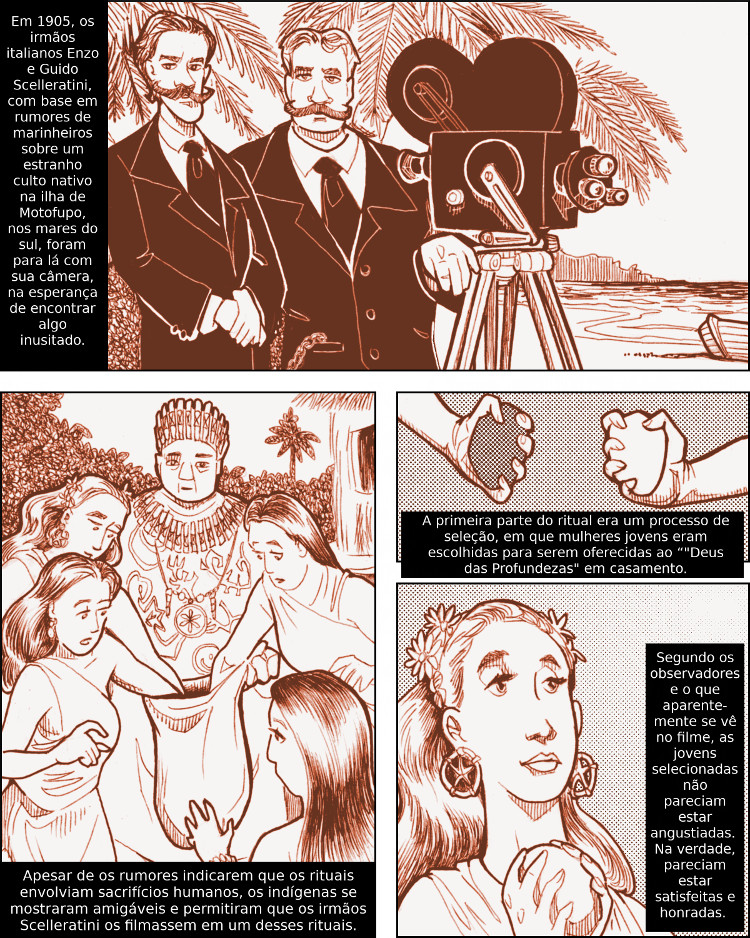
Panel 1: Two Italian men, ENZO SCELLERATINI (“Enzo”) and GUIDO SCELLERATINI (“Guido”) absurdly overdressed for their environment stand in coats, bow-ties, and bowler hats, posed on a beach with an old-fashioned, crank-operated movie camera. (Note: Both men have somewhat silly handlebar mustaches.)

CAPTION – PSEUDO-NARRATION (1): In 1905, Italian brothers Enzo and Guido Scelleratini, following up on sailors’ rumors of a strange native cult on the South Seas island of Motofupo, went there with a movie camera in hopes of finding something unusual.

Translation (1): Em 1905, os irmãos italianos Enzo e Guido Scelleratini, com base em rumores de marinheiros sobre um estranho culto nativo na ilha de Motofupo, nos mares do sul, foram para lá com sua câmera, na esperança de encontrar algo inusitado.

Panel 2: A group of attractive young Polynesian-looking women dressed in muumuuu-like garments reaching into a sack together to draw something out.

CAPTION – PSEUDO-NARRATION (2): In spite of the fact that their rituals were rumored to include human sacrifice, the indigenous people proved friendly and allowed the Scelleratini brothers to film them and one of those very rituals.

Translation (2): Apesar de os rumores indicarem que os rituais envolviam sacrifícios humanos, os indígenas se mostraram amigáveis e permitiram que os irmãos Scelleratini os filmassem em um desses rituais.

Panel 3: Close up of two hands of different young women in the panel. One holds a white stone, another a black stone.

CAPTION – PSEUDO-NARRATION (3): The first part of the ritual was a selection process to pick specific young women to be given to a “God of the Deeps” in marriage.

Translation (3): A primeira parte do ritual era um processo de seleção, em que mulheres jovens eram escolhidas para serem oferecidas ao “”Deus das Profundezas” em casamento.

Panel 4: One young woman of the Motofupo people (“the Bride”), cradling a stone, a beatific expression.

CAPTION – PSEUDO-NARRATION (4): According to observers and apparent on the film was that the young women so selected did not seem distressed. They instead seemed pleased and honored.

Translation (4): Segundo os observadores e o que aparentemente se vê no filme, as jovens selecionadas não pareciam estar angustiadas. Na verdade, pareciam estar satisfeitas e honradas.

  A Isca (Português/Versão em página longa)
A Isca (Português/Versão em carrossel)