Halloween squick or squee week III: Lab scene

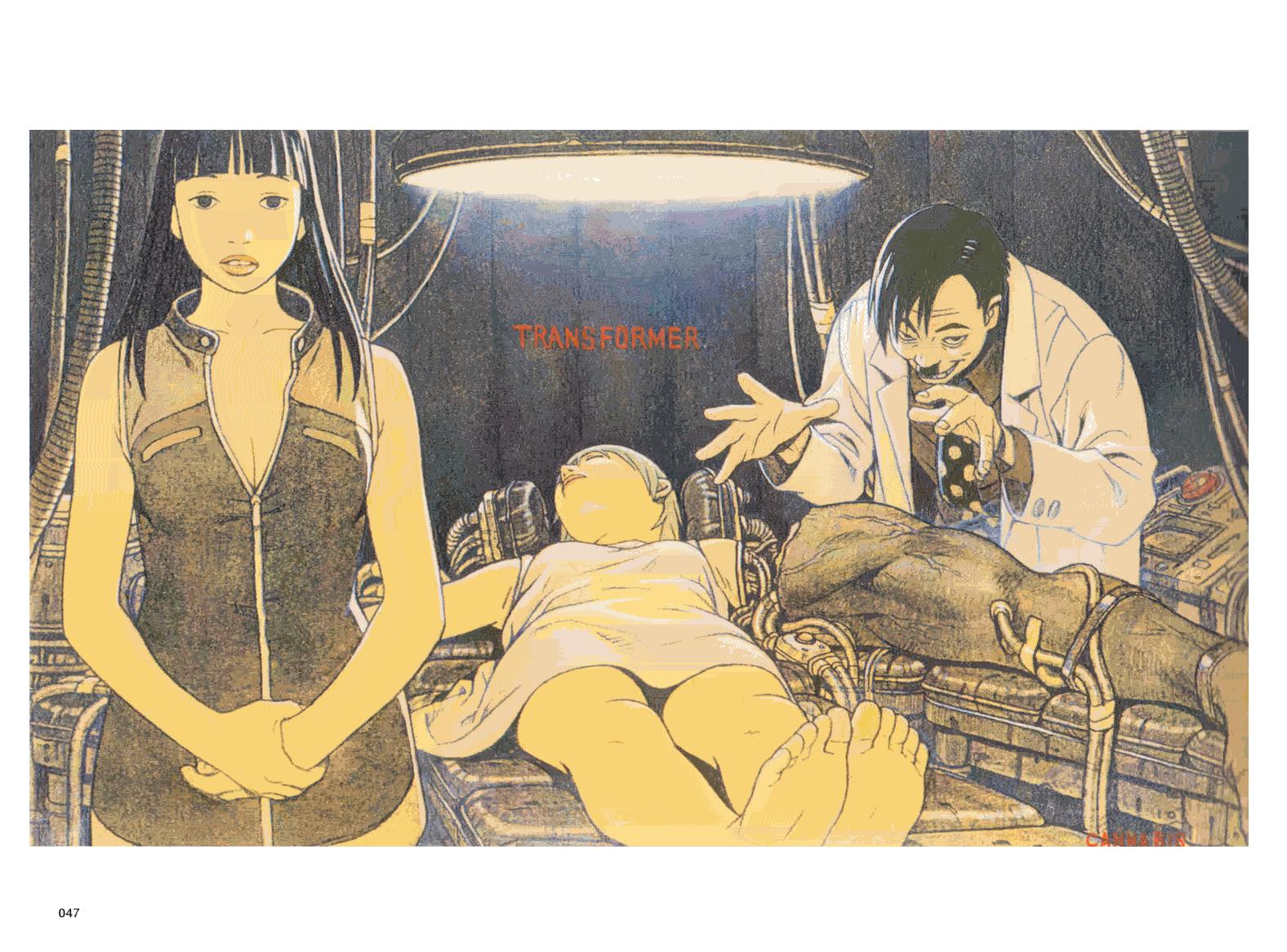
It wouldn’t be Erotic Mad Science without at least one lab scene.

Squick or squee!

Who knew there were Hitler impersonators in the mad science ranks?  (The mustache I can forgive, but the polka-dot tie?  Please, there are standards in the profession, people!) Aside from the fact that an improbable-looking transplant seems to be taking place, I’m afraid I have no idea what’s supposed to be going on here.  The young lady in the foreground looks like she should have a speech bubble in which she is providing explanatory narration, but no such luck.

Provenance is unclear, but a version of the image does appear in this gallery at awesome site io9.com.

Halloween squick or squee week II: Potgirl

Following up on yesterday’s theme of girls who are only heads, I came up with this, a girl who is only a head but who is evidently in a happier and more stable condition than Jan-in-a-pan.

Squick or Squee!

Yes, a potgirl.  This is a theme that Gamera at GammAtelier has been working on in the past year as well.  She looks cared for and well watered.

Image provenance is a bit uncertain, although this particular potgirl does show up at the Japanese-language blog B:logical nonsense.

Halloween squick or squee week I: The Brain That Would Not Die

Seeing as we’re in the week running up to Halloween (I have my mad scientist’s costume ready!) I’ll be running a series of mad-science related images, at least some of which might seem a little disturbing.  Provenance will be pretty variable.  Some I know well, and some are from dusty corners of my hard drive that I’d forgotten about until recently, and on which diligent image searching has failed to reveal much of interest.  I promise to do my best.

So let’s get Halloween Week underway, shall we?  Squick or Squee!

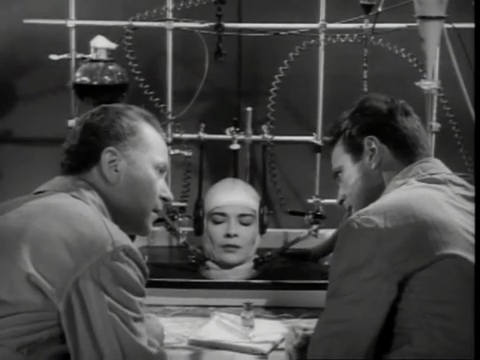
Yes, that really is a pair of mad scientists conferring over a woman’s head in a pan.

A living, fully-conscious head in a pan.  An expressive head in a pan.

The more radical amputation fetishists should be squeeing, at least.  The screenshots are from The Brain That Wouldn’t Die (1959), a movie that’s gleefully demented and exuberantly sleazy in the same way Invasion of the Bee Girls or Humanoids from the Deep are, and thus a must-view for any thaumatophile.  It really probably deserves its own post, but the short summary of the plot is this:  Jan, the girlfriend of brilliant but ethically challenged Dr. Bill Cortner, is decapitated in a grisly automobile accident.  (Her body is burned beyond useful restoration.)  Dr. Cortner takes Jan’s severed head to the nearby country house where he is conducting his experiments, wherein he succeeds in reviving her (it?) in a pan of special fluids with the aim of keeping her alive while he goes out to troll for a new donor body.  It’s a brilliant plan except for two tiny flaws (1) Jan is very unhappy about what she’s been reduced to and (2) she’s figured out a way to communicate with the results of Dr. Cortner’s previous…experiments, which are locked in the closet of said country house.  Uh oh.

You can apparently see the whole movie at the Internet Archive (and excellent late-night viewing it is) here.  It was also the subject of one of Mystery Science Theater 3000‘s best sendups:  YouTube video appears to begin here.

Happy viewing!

Bespoke Art Gallery now added to Erotic Mad Science

Seeing as I appear to be commissioning more and more original artwork for Erotic Mad Science (there are six completed works, and others in the pipeline), I’ve decided to gather it in one place rather than just have it scattered across a sequence of presentation posts. Allow me to introduce, therefore, the Bespoke Art Gallery, which will now be its own page here.

As the screenshot indicates, you will now be able to reference art by thumbnail, and get summaries of information about the artwork.  While the gallery is still in development (and might change in the future), I do hope it will be helpful and agreeable to readers.  Enjoy!

Gearheading

A commenter on my recent post on Flatliners nobly and rightly rose to a defense of the reputation of Chicago against its depiction in that movie. Ve mentioned therein the Museum of Science and Industry as a distinguished local attraction, an assessment with which I was in entire agreement for, among other reasons, I was a frequent visitor there as a small child and I have a lot of fond memories of the place.

Now there’s lot of awesome to love at that museum, but picking through my memories there was one thing in particular   stood out in my head as retrospectively mined fetish fuel.  It was one of the simplest exhibits by far and it was…

…simple machines for turning rotary motion into reciprocating motion.  Mounted up on a wall somewhere not far from the main entrance hall, where they had (have?) the awesome model train layout.  You could (probably still can, for all I know) play with them to your heart’s content.

(“Crank and slider” mechanism [left] and “rotary cam” mechanism [right], both found at this cool site.)

Now why, you might ask, is any of this really all that significant at Erotic Mad Science?  Well, aside from the fact that they are part of such retro-techno erotic dreams as this:

That’s Chicago, Burlington, & Quincy #3006, a 4-6-4 Hudson-class locomotive (image found at railfan.net) which is of course a technology for converting reciprocating motion into rotary motion which is in turn converted into linear motion, operated by by the same railroad that put into service this amazing Art Deco-style train:

The Pioneer Zephyr, for my money one of the sexiest  trainsets ever to run on rails, which, just by coincidence happens to be preserved at the Museum of Science and Industry.

But if you really want to understand why a mechanical subject like conversion of rotary into reciprocating motion is something we should care about here at Erotic Mad Science, have a look at this post.  Or this one.  Then you’ll understand, if you didn’t already.

Fusion organique

Here’s another Elvifrance cover, from it’s Série Blanche, No. 36, which is intriguing for the thaumatophile, because one has to ask, what on earth is going on here?

Are we looking at

  1. A conjoinment fantasy?  That would seem to be one obvious reading of une fusion organique.
  2. A liquid girl storyWiktionnaire gives the first definition fusion as “liquéfaction d’un corps par l’action de la chaleur” and there certainly does seem to be a bit of melting going on at the base of the illustration.
  3. Something A.S.F.R.-related even?  Women are not normally silver or gold like that.

As for the grotesque figure looming over them, I haven’t a clue.

It gets stranger from there, because there is some evidence that whatever was beneath the cover you see above was considered too naughty even to be published in France.  The index page for the cover art in the series tells us “Les n°35 et 36 sont des microtirages destinés à la commission de censure, donc jamais commercialisés.”

Which fact, of course, only makes this thaumatophile want it more.

Flatlining

Combing through my memory for influences I came up with a 1990 film, Flatliners (1990), which I remember, just barely, seeing at a matinee showing in some urban multiplex back when it came out.  Something about it, but somehow it was disappointing…so I got hold of a DVD and checked my memory.  Confirmed.  It was an influence, and disappointing in the end all at once.

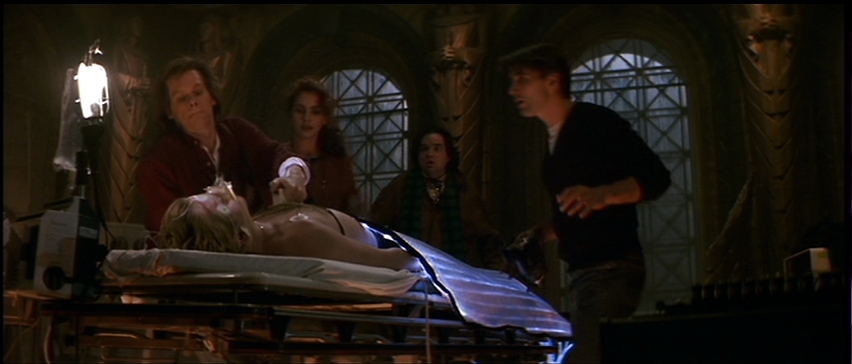
It starts so well.  Faustian medical student Nelson Wright (Kiefer Sutherland, reminding me how much I like Kiefer Sutherland when he isn’t friggin’ Jack Bauer) concocts a simple plan to explore what might lie beyond death.  With the help of his friends, he’ll induce his own cardiac arrest and then be revived after a few minutes of clinical death to report on his experiences.

He explains his enterprise with a soliloquy that deserves to live forever in the annals of cinematic mad science.  Why is he doing what he’s doing?

nelson

To see if there’s anything out there, beyond death. Philosophy failed. Religion failed. Now it’s up to the physical sciences. I think mankind deserves to know.

Oh fuck yes! This hits the right notes for the Promethean mad scientist. All for knowledge!

And, with some reluctance on the part of his friends, he jumps in with both feet and pulls it off.
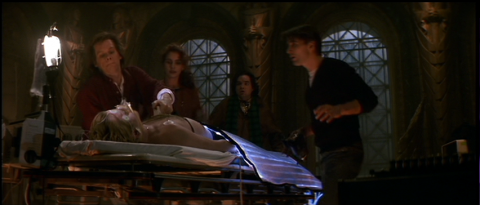
Nelson has some strange experiences that he can’t quite understand.

But I don’t mind, possibly because I’m distracted by all the action taking place in amazing atmospheric settings of creepy medical school architecture and some of the most lovingly-photographed urban decay you can see in cinema.

But it gets better from there.  While the revived Nelson deals with his own exhilaration at coming back form the dead, his friends head out to pick up beer and snacks.   While this is going on, one of the friends and fellow medical students Rachel (played by Julia Roberts) ponders what has happened and comes up with her own imperative.

rachel

I would like to go next.

Nanetta Rector, we have met your cinematic foremother.

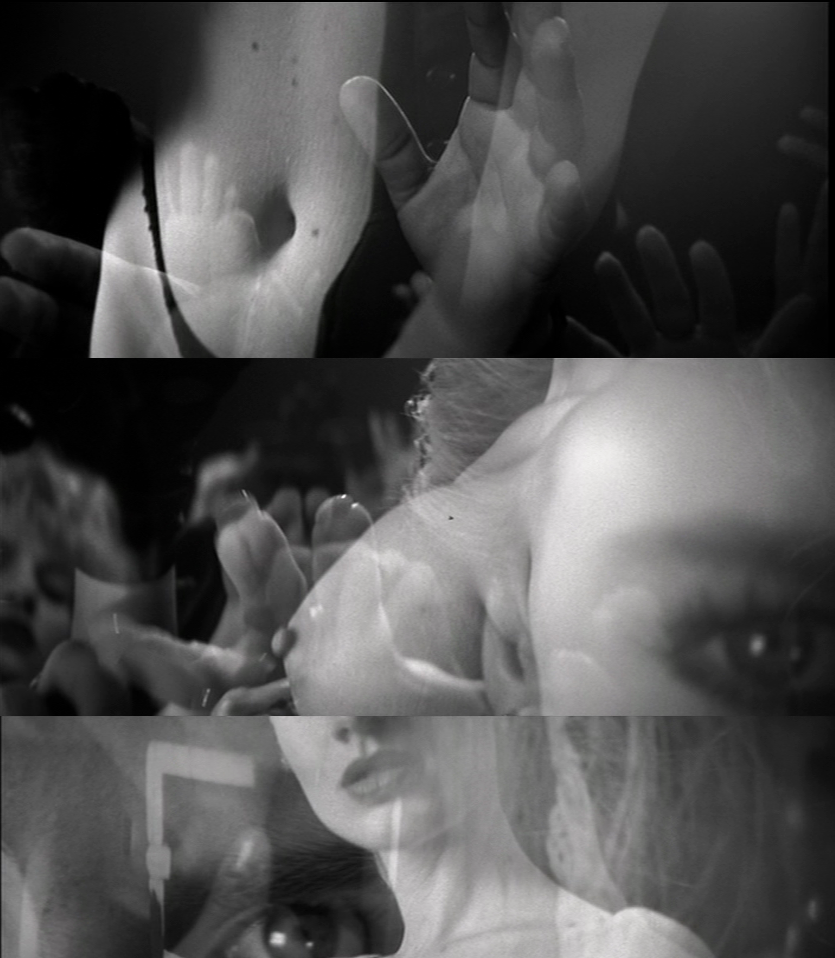
But Rachel doesn’t quite get to go next, because she’s outbid by other male members of Nelson’s twisted little team, including Joe Hurley (played by William Baldwin), who spends his (copious, apparently) free time as a medical student as a serial seducer who surreptitiously videotapes his conquests.  His near-death experience consists of an erotic montage which provides the movie’s true Erotic Mad Science moment:
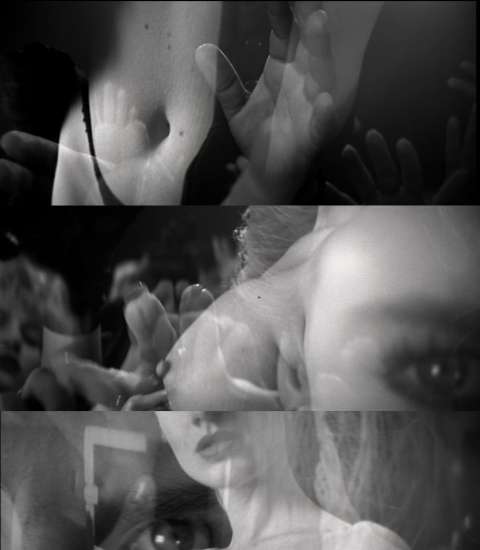
Maybe death is worth it.

Sadly the movie goes south from there, into a story of atonement and personal redemption that couldn’t be more bathos-laden if it had been written by Oprah herself.

My advice to thaumatophiles:  watch the first hour or so of this movie, on a big screen if you can arrange it.  It will worth the price of your ticket.  Then head out and enjoy the remaining hour in a nice cozy nearby bar.  That will also be worth it.

A philosophical digression

This really is a philosophical post, so if philosophy is something that bores or annoys you today might be a good day to wander off, fix yourself a nice beverage of choice, and perhaps enjoy the fine fall weather (or, if you live in the Southern Hemisphere, the fine spring weather) and see you tomorrow.

Metaethics might seem like a very strange thing to post on at all in a blog entitled Erotic Mad Science.  Or it might seem very strange until you reflect on defiant pronouncements like the one that appeared below the fold in yesterday’s post in response to an imagined critical interlocutor:

Finger-wagging moralists will doubtless appear to tell me that I need to feel really bad about myself.  (Or would, since I think anyone answering to the description of “finger-wagging moralist” who attempted to read this site would quickly have to retire with a case of the vapors.) But I think I’ll decline this invitation.

“But Faustus,” you might say, “how could you possibly feel free to decline that invitation.  What if you’re just wrong?”  Well folks, it’s like this:  after a long time sitting on the fence on the moral realism versus moral anti-realism question I’ve decided to hop off the fence and spend my time frolicking in John Mackie‘s garden.  Yes, having already come out of the closet as a thaumatophile, I feel a need also to out myself as a moral error theorist.  Like Mackie, I think there are no objective values.  I’m simply unpersuaded by the attempts of people who believe in the existence of objective moral facts to deal with the reality of human moral diversity, and I find the notion of moral prescriptions somehow woven into the fabric of the universe to be impossibly queer.

(Painting Antonio Allegri da Correggio (1489-1534), Allegory of Vice, ca. 1530.  Found here.)

Even I can’t bring myself to be so boring as to discuss the matter at length.  One way of getting to error theory (which I personally find persuasive) is explained in a five-step argument by Richard Joyce in his The Myth of Morality (2001).

  1. If x ought morally to φ, the x ought to φ, regardless of whether ve cares to, regardless of whether φing satisfies any of vis desires or furthers vis interests.
  2. If x morally ought to to φ, then x has a reason for φing.
  3. Therefore, if x morally ought to φ, then x has a reason for φing, regardless of whether φing serves vis desires or furthers vis interests.
  4. But there is no sense to be made of such reasons.
  5. Therefore x is never under a moral obligation.

Finger-wagging moralists can therefore go suck it:  their views aren’t true in any possible world.

Readers who are interested in (or enraged by) this argument are urged to follow up by reading either John Mackie’s classic Ethics:  Inventing Right and Wrong or Joyce’s book.  There’s also a fine new just-published anthology called A World without Values edited by Joyce and Simon Kirchin, although since it’s published by Springer you might have to take out a second mortgage if you actually want to buy a copy.  You can also peruse the “Thinkers” links to the right hand of the page for links to Joyce’s website, as well as to that of Richard Garner (under “Beyond Morality.”)  I aim to provide useful information here…

(Correggio, Allegory of Virtue.)

The implications of moral error theory are startling and, if you’re in the right mindframe, liberating.  It’s as exhilarating as losing your religion all over again, as recent moral de-convert Joel Marks has remarked in a recent essay.  And there are even rather cool atheological implications, as Jordan Howard Sobel (may he rest in peace) shows in Logic and Theism.  (Sure, theists are wrong.  That’s old news.  But many atheists — ones like Sam Harris certainly and many other probably — are also significantly wrong.)

Right.  Enough philosophy. Possibly going there was tedious, but it was something I had to get off my chest.  More proper mad science tomorrow, I promise.